Fernando Grijalva Wanted in $3 Million Boca Raton Corporate Embezzlement Case
Former Accounts Payable Executive Accused of Using Bogus Company and Fraudulent Invoices to Divert Millions
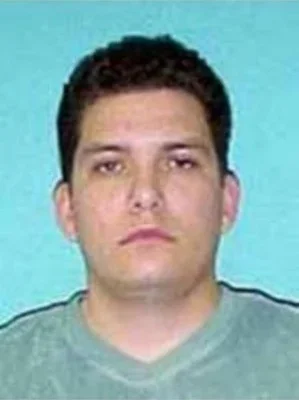
Fernando Grijalva is wanted in connection with an alleged multimillion-dollar embezzlement operation involving a corporate subsidiary in Boca Raton, Florida. Federal authorities accuse Grijalva of diverting more than $3 million while working as the head of accounts payable for a subsidiary of a multibillion-dollar company. The business purchased computer equipment and supplies and then sold those products to various distributors, placing Grijalva in a financial position that gave him access to the company's payment system.
From 2002 through 2003, authorities say Grijalva exploited his accounts payable position by creating a bogus company and issuing fraudulent invoices under that company's name. The invoices allegedly caused his employer to make payments for transactions that were not legitimate. The resulting losses exceeded $3 million before the operation was discovered and a federal criminal case was opened.
Head of Accounts Payable
Grijalva's position as head of accounts payable placed him within one of the most important financial functions of the Boca Raton company. Accounts payable departments are responsible for reviewing invoices, confirming obligations to vendors, processing payments, and maintaining records of money owed by a business. Employees with authority over those processes can have significant access to sensitive financial systems.
The subsidiary where Grijalva worked purchased computer supplies and equipment before selling the products to distributors. Such an operation could routinely process substantial numbers of invoices from vendors supplying technology products and related equipment. Against that background, a fraudulent invoice could potentially resemble the legitimate bills regularly moving through the company's accounting system.
Authorities say Grijalva used his position to exploit that process rather than simply stealing money directly from an account. By creating invoices associated with a company he controlled, payments could appear to represent ordinary business expenses while the underlying transactions were fraudulent.
A Bogus Company Created to Receive Payments
At the center of the alleged operation was a bogus company created by Grijalva. Federal authorities say he issued fraudulent invoices using the company's name while serving as head of accounts payable. The false vendor effectively provided a mechanism through which corporate money could be diverted.
Fake-vendor schemes can be particularly difficult for companies to detect when the person responsible for the fraud also has access to invoice processing. A legitimate accounts payable department may handle payments to dozens or hundreds of suppliers, making a new vendor less noticeable if appropriate controls are not in place.
The fraudulent company could therefore appear within accounting records alongside legitimate businesses supplying actual products and services. Investigators ultimately concluded that the invoices connected to Grijalva's company were fraudulent and that millions of dollars had been diverted through the operation.
Fraudulent Invoices Submitted From 2002 to 2003
The activity identified by authorities occurred from 2002 through 2003. During that period, Grijalva allegedly generated invoices under the name of his bogus business while maintaining his position within the company's accounts payable operation.
Invoices are normally supported by evidence showing that a business received goods or services. Purchase orders, shipping records, receiving reports, contracts, and vendor information can all be compared against an invoice before payment is authorized. A fraudulent invoice scheme attempts to make a nonexistent transaction appear sufficiently legitimate to pass through those controls.
An employee working inside the financial department may understand exactly how invoices are reviewed and approved. That knowledge can provide an advantage when designing fraudulent documents intended to avoid detection, particularly if the employee also holds authority over the payment process.
More Than $3 Million Allegedly Embezzled
Federal authorities place the amount involved at more than $3 million. The size of the alleged loss demonstrates that the operation extended well beyond a small number of unauthorized payments. Repeated fraudulent invoices over time can accumulate into enormous losses before discrepancies become large enough to attract attention.
Corporate embezzlement can remain hidden when individual payments resemble normal business expenses. Rather than removing millions of dollars in a single transaction, an internal fraud operation can use multiple payments distributed over months or years. Each payment may appear routine when viewed independently.
The alleged scheme continued across parts of two calendar years. By the time federal authorities became involved, Grijalva was accused of having diverted more than $3 million from the company where he held responsibility for accounts payable.
Why Accounts Payable Fraud Can Be Difficult to Detect
Accounts payable systems are designed to ensure legitimate vendors are paid accurately and on time, but the large number of transactions processed by major companies can also create opportunities for internal fraud. A person with knowledge of approval procedures may understand which transaction amounts receive additional scrutiny and what documentation is expected.
One important safeguard is separating responsibilities among employees. The person who creates a vendor should ideally not have unrestricted authority to approve that vendor's invoices and authorize payments. Independent verification can make it more difficult for a single employee to create a fictitious business and direct company money toward it.
Regular vendor audits can provide another layer of protection. Companies can compare vendor addresses, bank accounts, telephone numbers, tax information, and ownership details against employee information to identify suspicious connections.
Federal Mail Fraud and Bank Fraud Case
The investigation eventually resulted in federal allegations of mail fraud and bank fraud. Both are serious federal financial crimes that can be used in cases involving schemes designed to obtain money through fraudulent representations and transactions.
Mail fraud generally involves using the mail or qualifying delivery systems in furtherance of a fraudulent scheme. Bank fraud involves schemes intended to defraud financial institutions or obtain money, funds, or property under the custody or control of financial institutions through fraudulent means.
The specific charges reflected the methods authorities determined were associated with the alleged embezzlement operation. By December 2003, investigators had gathered enough information for the matter to proceed into federal court.
Federal Complaint Filed in December 2003
On December 12, 2003, a federal complaint was filed in the United States District Court for the Southern District of Florida. Grijalva was charged with mail fraud and bank fraud, and a federal warrant was issued for his arrest.
The Southern District of Florida includes Boca Raton and has jurisdiction over federal criminal matters arising in that part of the state. The federal case placed Grijalva among individuals sought in connection with major financial crimes.
The arrest warrant has remained associated with the unresolved prosecution. Because Grijalva has not been brought before the court to resolve the charges, the accusations stemming from the alleged $3 million operation remain pending.
Grijalva Was Already Involved With Florida's Criminal Justice System
The federal fraud case was not Grijalva's only legal problem. Local law-enforcement authorities in Florida also want him for violating probation connected to an unrelated grand theft case from 2001.
Probation allows a person to remain in the community under court-imposed conditions rather than serving all or part of a sentence in custody. Violating those conditions can result in a warrant and additional legal consequences. Grijalva's alleged probation violation therefore created a separate basis for Florida authorities to seek him.
The grand theft matter is distinct from the subsequent federal embezzlement investigation. However, it means Grijalva became wanted by both federal and local authorities rather than facing only the mail fraud and bank fraud case.
A Fugitive Sought by Multiple Authorities
The combination of the federal arrest warrant and Florida probation matter makes Grijalva a fugitive in more than one unresolved proceeding. Federal authorities seek him in connection with the alleged corporate embezzlement, while local authorities seek him over the probation violation.
Cases involving multiple warrants can require coordination between agencies once a fugitive is located. Depending on where an individual is arrested and which warrants remain active, authorities determine how the person will be transferred and which court proceedings occur first.
Information establishing Grijalva's current location could therefore be significant to multiple law-enforcement agencies. The passage of time does not by itself eliminate outstanding warrants or resolve the underlying cases.
A Corporate Insider Fraud Investigation
Grijalva's case illustrates the risks companies face from insider financial fraud. Unlike an outside attacker attempting to penetrate a business, an employee may already have legitimate access to financial systems, company records, vendor information, and payment procedures.
That access can make insider schemes particularly damaging. An employee may know which controls exist, who reviews transactions, when audits occur, and what documentation will make a payment appear legitimate. Seniority or responsibility can also make colleagues less likely to question transactions approved by the employee.
In Grijalva's case, his position as head of accounts payable placed him directly within the system responsible for paying corporate obligations. Authorities say he exploited that access by creating a bogus company and fraudulent invoices.
How Fake-Vendor Schemes Work
A fake-vendor operation generally begins with the creation of a company or vendor identity that appears capable of providing legitimate products or services. Fraudulent invoices are then submitted to the victim company for goods or services that were never supplied or were materially misrepresented.
If the invoices are approved, corporate money is transferred to an account associated with the fraudulent vendor. The person controlling that vendor can then access the proceeds while accounting records make the transaction appear to be an ordinary business expense.
Such schemes can continue for extended periods when invoice amounts are consistent with the victim company's normal spending. In a business regularly purchasing computer equipment and supplies, vendor payments would be an expected part of daily operations.
Detecting Fraudulent Corporate Vendors
Businesses can reduce the risk of fake-vendor fraud through independent vendor verification and regular analysis of payment records. Newly created suppliers can be checked against corporate registration databases, tax records, addresses, telephone numbers, and banking information before payments are authorized.
Companies can also look for vendors sharing addresses, telephone numbers, or banking details with employees. Unusual payment patterns, repeated round-number invoices, unexplained increases in payments, and vendors without supporting purchase or delivery records can warrant additional examination.
Strong internal controls are particularly important for employees holding financial authority. No single person should have unrestricted ability to create a vendor, approve invoices, and authorize payments without independent oversight.
More Than Two Decades Since the Federal Warrant
The federal warrant for Fernando Grijalva dates to December 12, 2003, making this a long-running financial fugitive case. More than two decades have passed since authorities filed the federal complaint accusing him of mail fraud and bank fraud.
The passage of time can make fugitive investigations significantly more complicated. Physical appearances change, former addresses become obsolete, businesses close, employment histories evolve, and individuals can establish entirely new social and professional networks.
Someone encountering Grijalva today may have no knowledge of his employment in Boca Raton or the financial investigation that began more than 20 years ago. Current information concerning his residence, employment, travel, associates, or contact information could therefore be important to investigators.
Fernando Grijalva Remains Wanted
Fernando Grijalva remains wanted in connection with the alleged embezzlement of more than $3 million from a Boca Raton corporate subsidiary where he served as head of accounts payable. Federal authorities accuse him of creating a bogus company and issuing fraudulent invoices under its name between 2002 and 2003, using his position within the company to facilitate the scheme. He was charged with mail fraud and bank fraud, and a federal arrest warrant was issued on December 12, 2003.
Grijalva is also wanted by local Florida authorities for violating probation stemming from an unrelated 2001 grand theft case. His federal and local cases have remained unresolved for more than two decades. Anyone with information concerning his whereabouts should provide it directly to appropriate law-enforcement authorities rather than attempting to confront, follow, detain, or apprehend him.