Daniel Guzman Wanted After Disappearing During Multimillion-Dollar Medicaid Fraud Case
New York Pharmacy Worker Accused of Billing Medicaid for Prescription Drugs That Were Never Dispensed
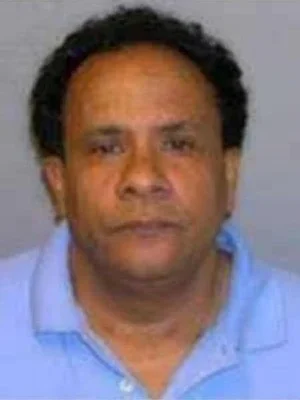
Daniel Guzman is wanted by the Federal Bureau of Investigation in connection with a health care fraud scheme that authorities say cost Medicaid millions of dollars. Federal authorities accuse Guzman of conspiring with others to obtain fraudulent reimbursements by submitting claims for prescription medications that were never actually dispensed to Medicaid beneficiaries. The operation was connected to a pharmacy in the Washington Heights neighborhood of Manhattan in New York City.
Guzman was initially arrested on August 13, 2008, pursuant to a federal arrest warrant issued in the Southern District of New York and was subsequently released on bond. While his federal case was pending, Guzman failed to appear for a required court date. A second federal arrest warrant was issued on January 16, 2009, and he was charged with failure to appear.
Millions of Dollars in Medicaid Losses
The federal investigation centered on fraudulent claims submitted to Medicaid, the government health insurance program that provides coverage to eligible low-income individuals and other qualifying populations. Pharmacies participating in Medicaid can receive reimbursement for covered prescription medications legitimately provided to beneficiaries. Federal authorities say the operation involving Guzman exploited that reimbursement system.
Investigators accuse Guzman and others of submitting claims for medications that were never dispensed. The reimbursement requests represented that qualifying prescription drugs had been provided to Medicaid patients when authorities say those medications were not actually given to them. Medicaid then received requests to pay the full value of those prescriptions.
Repeated fraudulent claims can generate substantial losses when conducted across large numbers of prescriptions and patients. Authorities ultimately described the losses connected with the operation as totaling millions of dollars, making the case a significant federal health care fraud investigation.
Washington Heights Pharmacy at Center of Scheme
Guzman worked at a pharmacy in Washington Heights, a neighborhood in northern Manhattan. His position provided access to prescriptions presented by Medicaid beneficiaries and to the billing processes used to seek reimbursement from the program. Federal authorities say that access became central to the operation.
According to the FBI, Guzman received legitimate prescriptions from Medicaid beneficiaries. Instead of simply filling the prescriptions and billing Medicaid for medications actually provided, authorities accuse him of using prescription information to generate fraudulent reimbursement requests.
The pharmacy setting was important because prescription claims can appear routine within the enormous volume of transactions processed by government health programs. Investigators must analyze billing patterns, patient records, prescription information, inventories, and other evidence to determine whether medications associated with reimbursement claims were actually dispensed.
Prescriptions Used to Generate False Claims
The operation relied on prescription information belonging to Medicaid beneficiaries. Federal authorities say Guzman received prescriptions and subsequently submitted phony reimbursement claims seeking payment for the full value of the drugs. The central accusation is that the medications associated with those claims were never dispensed.
This type of fraud can exploit the difference between what a billing system records and what actually happens inside a pharmacy. A reimbursement database may show that a prescription was filled and medication provided to a patient, while an investigation can reveal that no corresponding medication left the pharmacy.
Each fraudulent claim can result in government money being paid without any legitimate medical product being provided in return. When repeated across many prescriptions, the individual payments can accumulate into substantial losses.
Medicaid Billed for Full Prescription Value
Authorities say the claims sought reimbursement for the full value of the prescription medications. This meant the Medicaid program could process a claim as though the beneficiary had received the complete prescription, despite the government's allegation that the medication had not been dispensed.
Prescription medications can vary enormously in price, and some treatments can carry substantial reimbursement costs. A fraudulent pharmacy operation does not necessarily require an extremely large number of patients to generate significant proceeds if expensive medications are involved.
Federal investigators ultimately connected Guzman to a conspiracy rather than treating the questionable claims as isolated billing errors. The government accused multiple participants of working together to obtain Medicaid reimbursements through fraudulent submissions.
Health Care Fraud Through Phantom Billing
The conduct described in Guzman's case is commonly associated with what is sometimes called phantom billing—seeking payment for medical products or services that were never actually provided. Similar schemes can involve nonexistent medical appointments, diagnostic tests that were never performed, equipment that was never supplied, or medications that patients never received.
Phantom billing can be particularly damaging because there is no legitimate service underlying the payment. The government reimburses a provider based on records indicating that treatment or medication was supplied when the claimed event never occurred.
Health care fraud investigators can compare claims against medical and pharmacy records to identify inconsistencies. Prescription inventory, ordering records, patient interviews, reimbursement data, and pharmacy documentation can help establish whether medications corresponding to billed prescriptions were actually available and dispensed.
Patients' Prescription Information Was Critical
Medicaid beneficiaries played an important role in the operation because their prescriptions provided the information necessary to submit reimbursement claims. A valid patient's identity and prescription can make a claim appear legitimate when it enters the Medicaid billing system.
This demonstrates why medical and insurance information can be valuable in health care fraud operations. A beneficiary's information can potentially be used to generate claims even when the patient receives nothing connected with the reimbursement request.
Patients reviewing their insurance or medical records should therefore pay attention to prescriptions, treatments, or services they do not recognize. Unexpected claims can sometimes indicate administrative mistakes, but they can also provide an early warning of fraudulent use of a person's health care information.
Federal Authorities Build a Criminal Case
The millions of dollars in suspected losses eventually led federal authorities to pursue criminal charges. Investigators examined Guzman's activities at the Washington Heights pharmacy and his alleged participation with others in obtaining improper Medicaid reimbursements.
Health care fraud investigations can require extensive financial and medical record analysis. Investigators may compare government claims data against pharmacy inventory, prescriptions, banking records, patient histories, and communications among the people involved.
When suspicious billing extends over a substantial period, those records can reveal patterns that would be difficult to identify by examining a single prescription. Federal authorities ultimately obtained a warrant for Guzman's arrest through the Southern District of New York.
Guzman Arrested in August 2008
On August 13, 2008, Guzman was arrested pursuant to a federal arrest warrant issued by the United States District Court for the Southern District of New York. His arrest initially placed him within the federal judicial process, where the government's allegations could proceed toward resolution.
Guzman was subsequently released on bond. A defendant released on bond remains subject to court requirements, including appearing for scheduled proceedings and complying with any conditions imposed as part of the release.
His release therefore did not end the criminal case. Guzman remained obligated to return to court as directed while federal prosecutors continued pursuing the charges.
Released on Bond Before Disappearing
Federal courts may allow defendants to remain outside custody while awaiting trial when applicable requirements are satisfied. Conditions can be imposed to reduce the risk that a defendant will flee or otherwise interfere with the judicial process. One of the most fundamental requirements is appearing in court when ordered.
Guzman's case initially proceeded under those circumstances after his August 2008 arrest. He had been taken into federal custody and subsequently released, giving him an opportunity to continue participating in the case without remaining incarcerated before trial.
That changed when Guzman failed to appear for a scheduled court date. His absence created a separate federal issue beyond the original health care fraud investigation.
Second Federal Warrant Issued
On January 16, 2009, the Southern District of New York issued another federal arrest warrant for Daniel Guzman. He was charged with failure to appear after missing the required court proceeding.
The new warrant transformed the investigation into a fugitive case. Authorities were no longer simply prosecuting an individual accused of participating in Medicaid fraud; they now had to locate a defendant who had previously been arrested, released, and ordered to return to court.
His failure to appear has kept the federal case unresolved for years. Until Guzman is located and brought back before the court, authorities cannot complete the ordinary judicial process associated with the pending case.
The Difference Between the Fraud Case and Fugitive Charge
There are two important components to Guzman's federal case. The underlying investigation concerns his alleged participation in the multimillion-dollar Medicaid fraud scheme. Those accusations concern the submission of reimbursement claims for prescription drugs authorities say were never dispensed.
The second component concerns his conduct after his arrest. Guzman was released on bond and subsequently failed to return for a scheduled court appearance. That failure resulted in the January 2009 warrant and a separate failure-to-appear charge.
Keeping these elements separate is important when describing his legal status. The health care fraud accusations remain allegations pending resolution through the court system, while the failure to appear explains why federal authorities currently classify him as a fugitive.
Why Prescription Fraud Costs Taxpayers
Medicaid programs process enormous numbers of legitimate claims from pharmacies, doctors, hospitals, and other health care providers. The system depends on those providers accurately reporting what medical products and services were delivered. Fraudulent billing diverts government money away from legitimate patient care.
Prescription fraud can be particularly difficult to detect when claims contain real patient information. A claim associated with an actual Medicaid beneficiary and an authentic prescription may initially appear legitimate within a large reimbursement database.
Investigators therefore rely on patterns and supporting records. A pharmacy consistently billing for medications it did not have in inventory, patients reporting that they never received medications, or unusual reimbursement patterns can provide indicators requiring additional investigation.
Impact on Medicaid Beneficiaries
Fraudulent prescription claims can affect patients even when they do not directly lose money. False claims can become part of a beneficiary's insurance history and create inaccurate records indicating that medications were dispensed when they were not.
Those inaccuracies can potentially cause confusion when patients later seek legitimate treatment. They can also make it more difficult for government agencies to determine whether reimbursement requests represent actual medical needs.
Patients who notice unfamiliar prescriptions or medical services in their benefit records should report those discrepancies through the appropriate health program or law-enforcement channels. Individual reports can sometimes help investigators identify larger patterns of fraudulent billing.
A Long-Running Federal Fugitive Case
Guzman's second federal warrant dates to January 16, 2009, making his case a long-running fugitive investigation. More than 17 years have passed since he failed to appear in federal court.
Such a lengthy period can make locating a fugitive considerably more difficult. Addresses become outdated, employment changes, personal relationships evolve, and physical appearances can change. People who encounter a fugitive years later may have no knowledge of the person's previous criminal case.
New information can nevertheless remain valuable regardless of how old a warrant is. A current residence, workplace, telephone number, travel pattern, vehicle, or associate could provide investigators with information capable of reconnecting the fugitive to the unresolved federal case.
Daniel Guzman Remains Wanted
Daniel Guzman remains wanted after failing to appear in federal court while facing prosecution in connection with a multimillion-dollar Medicaid fraud investigation. Federal authorities accuse Guzman of working with others to submit fraudulent reimbursement claims through a Washington Heights pharmacy for prescription medications that were never dispensed. The operation allegedly obtained payments for the full value of prescriptions despite patients not receiving the corresponding drugs.
Guzman was arrested on August 13, 2008, and subsequently released on bond. After he failed to appear for a required court date, the United States District Court for the Southern District of New York issued another federal arrest warrant on January 16, 2009, and charged him with failure to appear. Anyone with information concerning his whereabouts should provide it directly to appropriate law-enforcement authorities rather than attempting to confront, follow, detain, or apprehend him.