FBI Seeks Ismail Shalash in $3.4 Million Luxury Vehicle Fraud Case
Fugitive Wanted on Federal Wire Fraud and Money Laundering Charges
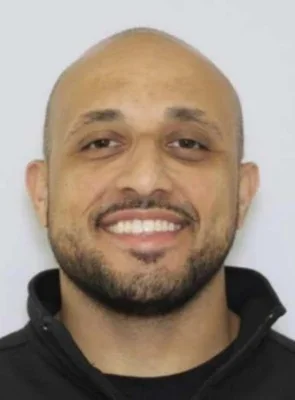
Ismail Shalash is wanted by the Federal Bureau of Investigation on federal charges of wire fraud and laundering of monetary instruments in connection with a multimillion-dollar luxury vehicle scheme. Federal authorities say Shalash marketed vehicles online to owners of privately owned car dealerships in multiple states, accepted substantial payments, and then failed to deliver the promised vehicles. A federal arrest warrant was issued for Shalash on September 30, 2021, by the United States District Court for the Southern District of Ohio.
Authorities say Shalash attempted to defraud eight victims across five states of approximately $3.4 million. Five victims in four states were defrauded of approximately $1.7 million, according to the FBI's account of the case. Shalash has dual Jordanian and Palestinian citizenship and has ties to Cincinnati, Ohio.
Luxury Vehicles Offered to Car Dealerships
The operation centered on luxury vehicles offered for sale to privately owned automobile dealerships. Shalash would communicate with dealership owners and offer vehicles that appeared to represent legitimate business opportunities. Once an agreement was reached, victims transmitted payment with the expectation that the purchased vehicles would subsequently be delivered.
The vehicles never arrived in the completed transactions identified by federal authorities. Dealership owners initially waited for delivery, but as unreasonable amounts of time passed, they began repeatedly attempting to contact Shalash. Those efforts either went unanswered or failed to produce the vehicles or refunds the victims were seeking.
The alleged scheme was particularly damaging because the victims were businesses making high-value purchases rather than consumers buying inexpensive goods. Luxury automobiles can involve transactions worth tens or hundreds of thousands of dollars, allowing a relatively small number of fraudulent transactions to generate substantial losses. The federal investigation ultimately documented losses reaching approximately $1.7 million.
The Alias “Armand Brigante”
Federal investigators say Shalash sometimes operated using the name “Armand Brigante” of MDDI Inc. The alias was used to make victims believe that Ismail Shalash and Armand Brigante were two different people. Creating the appearance of multiple individuals allowed communications surrounding the vehicle transactions to appear to involve separate business contacts.
The use of an alternate identity became an important part of the investigation because victims dealing with “Armand Brigante” could believe they were communicating with someone independent from Shalash. Authorities ultimately identified the two identities as being connected to the same person. The FBI continues to list “Armand Brigante” among the aliases associated with Shalash.
Aliases can complicate fraud investigations because victims may initially report different names despite having dealt with the same individual. Investigators must then connect telephone numbers, email addresses, financial transactions, corporate records, online communications, and other information to establish the relationship between those identities. In an interstate scheme, those connections can become particularly important when victims are located in several different jurisdictions.
Payments Made, Vehicles Never Delivered
The basic pattern described by authorities involved an agreement for a vehicle followed by payment from the dealership purchasing it. Victims expected delivery after their money had been transmitted, but the promised automobiles did not arrive. As delays increased, dealership owners became increasingly concerned and attempted to obtain information about their purchases.
Victims eventually made aggressive efforts to contact Shalash after determining that an unreasonable amount of time had passed. Those communications either went unanswered or failed to resolve the missing deliveries. The dealerships ultimately received neither the vehicles they had purchased nor refunds for the money they had transmitted.
This pattern allowed substantial amounts of money to be collected through transactions that initially appeared to be ordinary vehicle purchases. A dealership expecting delivery may not immediately recognize a transaction as fraudulent because shipping, transportation, paperwork, and other legitimate issues can sometimes cause delays. That period can give the person receiving the money additional time before the victim concludes that the promised vehicle is not coming.
Eight Victims Targeted Across Five States
Federal authorities say Shalash attempted to defraud eight victims located across five states. The total value of the attempted fraud was approximately $3.4 million, demonstrating the high-dollar nature of the transactions under investigation. Of those intended victims, five located in four states suffered combined losses of approximately $1.7 million.
The difference between attempted and completed losses is significant. While authorities identified approximately $3.4 million in transactions connected with attempted fraud, the documented amount actually taken from victims was approximately half that figure. Even with only five successful transactions identified by the FBI, the average financial impact was substantial.
The interstate nature of the activity also brought the transactions within the scope of a federal investigation. Communications and financial transfers involving victims in different states can generate electronic records across multiple financial institutions and service providers. Investigators can use those records to reconstruct communications, payments, and the movement of money connected with a suspected fraud operation.
From Vehicle Fraud to Money Laundering Investigation
The federal case against Shalash includes both wire fraud and money laundering allegations. Wire fraud generally involves the use of interstate electronic communications as part of a scheme to obtain money or property through fraudulent representations. Money laundering investigations focus on financial transactions involving proceeds connected to criminal activity.
Federal investigators examining a fraud operation can follow the movement of money after victims make payments. Bank records, wire transfers, account information, corporate transactions, and other financial evidence can reveal where money was sent and how it was subsequently moved. In Shalash's case, that investigation resulted in a federal charge involving laundering of monetary instruments in addition to wire fraud.
The combination of charges reflects the two different stages investigators can examine in a financial crime case. Authorities can investigate how victims were convinced to send their money and then separately trace what happened to those funds after they were received. Both became components of the federal prosecution against Shalash.
Federal Arrest Warrant Issued
On September 30, 2021, a federal arrest warrant was issued for Ismail Shalash after he was charged in the United States District Court for the Southern District of Ohio. The federal charges listed by the FBI are wire fraud and laundering of monetary instruments. Shalash remains wanted while those charges are pending.
The FBI's Cincinnati Field Office is responsible for the wanted notice. Shalash's connections to Cincinnati are particularly relevant because the federal prosecution originated in the Southern District of Ohio. Authorities continue to publish his photograph, identifying information, aliases, and other details to assist in locating him.
His wanted status means the federal charges have not been resolved through a completed criminal proceeding. If Shalash is located and arrested, the pending case can proceed through the federal court system. The charges themselves are accusations, and guilt would ultimately have to be established through the judicial process.
Who Is Ismail Shalash?
Ismail Shalash was born on March 15, 1985, in Amman, Jordan. The FBI describes him as approximately 5 feet 11 inches tall and weighing about 175 pounds, with black hair and brown eyes. Authorities state that he has dual citizenship with Jordan and Palestine.
The FBI lists several aliases associated with Shalash, including “Armand Brigante,” “Frank Borg,” and “Fadi Ayoub.” The use of multiple identities is significant because individuals who have conducted business with him may recognize one of those names without immediately recognizing Ismail Shalash. Federal authorities have therefore included the aliases with his wanted information to assist the public and other investigators.
Shalash has ties to Cincinnati, Ohio, where the FBI field office handling his case is located. His international citizenship and connections add another dimension to the search for him. Federal authorities continue seeking information that could establish his current location.
High-Dollar Fraud Against Businesses
The Shalash case demonstrates how businesses can become victims of fraud through transactions that initially resemble normal commercial deals. Automobile dealerships routinely purchase inventory from auctions, wholesalers, other dealers, and private sellers, making vehicle transactions between businesses commonplace. A fraudulent seller can attempt to exploit those normal business practices by offering desirable inventory and creating the appearance of a legitimate transaction.
Luxury vehicles make such schemes potentially lucrative because individual transactions can involve large sums of money. A person does not need hundreds of successful victims to generate millions of dollars in losses when each transaction involves expensive automobiles. In this case, five victims accounted for approximately $1.7 million in completed losses.
The alleged use of a separate business identity added another level of deception to the operation. Victims could believe they were dealing with multiple people associated with a company rather than communicating with one individual using different identities. That appearance could make the transaction seem more established and professional than it actually was.
Warning Signs in High-Value Vehicle Transactions
Large vehicle transactions require careful verification, particularly when the buyer and seller are operating remotely. Businesses can verify vehicle identification numbers, titles, ownership records, corporate information, transportation arrangements, and the identity of the person receiving payment before transferring substantial amounts of money. Independent verification becomes especially important when the seller is not physically present.
Unexpected delivery delays can also become an important warning sign. A legitimate seller should generally be able to provide documentation concerning the vehicle's location, ownership, transportation arrangements, and expected delivery. Repeated excuses combined with unanswered communications and an inability to verify where the vehicle is located can indicate a serious problem.
Businesses should also independently verify banking and payment instructions when substantial sums are involved. Fraud schemes frequently depend on creating urgency or trust before a victim has completed independent checks. Once a large wire transfer has been completed and the money has been moved elsewhere, recovering the funds can become significantly more difficult.
Shalash Remains Wanted
Ismail Shalash remains wanted on federal charges of wire fraud and laundering of monetary instruments in connection with the luxury vehicle investigation. Authorities say he attempted to defraud eight victims in five states of approximately $3.4 million and successfully defrauded five victims in four states of approximately $1.7 million. His federal arrest warrant has remained outstanding since September 30, 2021.
Anyone with information concerning Shalash's whereabouts should provide that information directly to the FBI or another appropriate law-enforcement agency. Individuals outside the United States can contact the nearest American Embassy or Consulate. Members of the public should not attempt to confront, follow, detain, or apprehend a wanted individual.