$1,000 FBI Reward Offered in Search for Health Care Fraud Fugitive Ayitey Ayayee-Amim
Former Texas Home Health Worker Failed to Appear for Federal Jury Trial
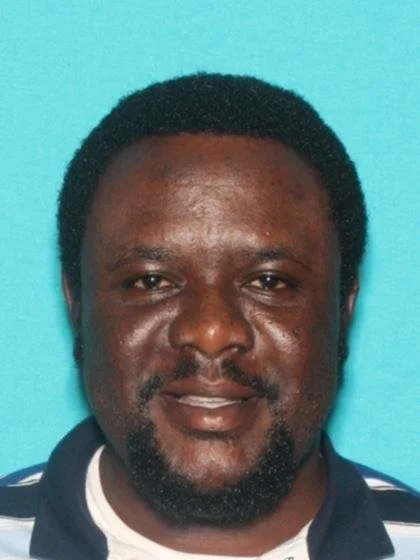
Ayitey Ayayee-Amim is wanted by the Federal Bureau of Investigation in connection with a federal health care fraud prosecution involving Medicare claims submitted through Paradise Home Health in Arlington, Texas. Federal authorities say Amim and his co-conspirators submitted false and fraudulent Medicare claims for health services that were medically unnecessary or were never provided. The FBI is offering a reward of up to $1,000 for information leading to his arrest and conviction.
Amim was arrested on May 8, 2015, and later released from custody on bail while the federal case proceeded. He was indicted for conspiracy to commit health care fraud on September 1, 2015, but failed to appear for his scheduled jury trial on August 15, 2016. A federal arrest warrant was subsequently issued by the United States District Court for the Northern District of Texas, and Amim remains wanted.
Paradise Home Health Investigation
The federal case centers on activities at Paradise Home Health in Arlington, Texas, where authorities say Amim and his co-conspirators worked between 2010 and 2011. Home health providers can submit claims to Medicare for qualifying medical services provided to eligible patients, but those claims must accurately represent the care that was medically necessary and actually delivered. Federal investigators say claims associated with the operation did not meet those requirements.
According to the FBI, Amim participated in submitting claims for services that were medically unnecessary. Other claims were allegedly submitted for services that were never provided at all. These claims sought reimbursement from Medicare despite the government's position that the underlying services did not legitimately qualify for payment.
The investigation eventually expanded beyond billing practices to include the methods allegedly used to obtain and retain patients. Authorities say Amim recruited new patients for the operation and paid cash kickbacks to established patients. These activities became part of the broader federal health care fraud case.
Medicare Billed for Unnecessary or Unprovided Services
Medicare fraud can occur when a provider knowingly submits claims containing false information to obtain federal reimbursement. Billing for a service that was never performed is one of the most direct forms of fraudulent billing, while claims for medically unnecessary treatment can improperly generate payments for care that a patient did not legitimately require. Both types of claims are identified in the federal allegations against Amim.
Home health care is intended to provide qualifying patients with medical services in their homes when applicable requirements are met. Providers participating in Medicare are required to maintain accurate records supporting the services for which they seek reimbursement. Fraudulent claims can divert money from a federal health program and undermine resources intended for legitimate patient care.
Authorities say the activity involving Amim occurred over the course of 2010 and 2011. Investigators ultimately developed a federal case alleging that he worked with other individuals rather than acting alone. That investigation resulted in the conspiracy charge filed against him.
Cash Kickbacks Paid to Patients
Federal authorities also accuse Amim of paying cash kickbacks to established patients. Kickbacks can be used in health care fraud operations to encourage patients to continue participating in arrangements that generate reimbursable claims. Payments can create a financial incentive unrelated to whether the medical services being billed are actually necessary.
The FBI says Amim was also involved in recruiting new patients. Increasing the number of patients associated with a home health provider can increase the number of claims submitted for government reimbursement. When those patients are recruited as part of a fraudulent operation, each new person can potentially generate additional improper claims.
The combination of patient recruitment, alleged kickbacks, and fraudulent billing became central to the government's case. Rather than focusing exclusively on individual Medicare claims, investigators examined the broader system through which patients were brought into the operation and claims were generated.
Federal Health Care Fraud Conspiracy Charge
Amim was indicted on September 1, 2015, for conspiracy to commit health care fraud. A conspiracy charge allows federal prosecutors to pursue participants accused of agreeing to work together toward a criminal objective. In a health care fraud case, prosecutors can examine the respective roles of people involved in recruiting patients, preparing documentation, submitting claims, receiving payments, or otherwise supporting the operation.
The charge followed a federal investigation into Paradise Home Health and the conduct of individuals associated with the provider. Investigators examined activities occurring several years earlier, during the 2010-2011 period when Amim worked there. The resulting prosecution eventually brought Amim before the federal court system in Texas.
By the time of his indictment, Amim had already been arrested. His initial arrest occurred on May 8, 2015, and he was subsequently released on bail while awaiting further proceedings. That release required him to remain available to the court and comply with the conditions imposed on him.
Released on Bail After His Arrest
Amim's case differs from that of a suspect who disappeared before ever being taken into custody. Federal authorities successfully arrested him in May 2015, after which he was released on bail. His criminal case continued toward a scheduled jury trial.
Release on bail does not end a criminal prosecution. A defendant remains required to appear for scheduled court proceedings and comply with conditions established by the court. Failure to appear can result in another arrest warrant and additional legal consequences.
For more than a year following his arrest, Amim's case remained within the federal judicial process. That changed in August 2016 when the date arrived for his jury trial and he did not appear.
Amim Fails to Appear for Jury Trial
On August 15, 2016, Amim failed to appear for his scheduled federal jury trial. His absence prevented the prosecution from proceeding against him as planned. The United States District Court for the Northern District of Texas subsequently issued a federal arrest warrant.
His disappearance transformed the case from an active health care fraud prosecution into a fugitive investigation. Authorities were no longer dealing solely with the allegations involving Paradise Home Health; they also needed to determine where a defendant who had previously been arrested and released had gone. Amim has remained wanted under that federal warrant.
The length of time since his disappearance means his current appearance, residence, employment, and travel patterns may have changed. Information from people who have encountered him more recently could therefore be especially important to investigators.
FBI Offers a Reward of Up to $1,000
The FBI is offering a reward of up to $1,000 for information leading to the arrest and conviction of Ayitey Ayayee-Amim. The reward remains prominently identified on his federal wanted notice. Authorities are seeking information that could establish where he currently resides or travels.
Rewards can encourage individuals who possess meaningful information to contact investigators, particularly in fugitive cases that have remained unresolved for years. A person does not necessarily need to know every detail of a fugitive's activities to possess useful information. A current address, workplace, telephone number, travel pattern, vehicle, or known associate could potentially help authorities develop a lead.
Anyone seeking the reward should communicate directly with the FBI and follow the agency's procedures. Members of the public should not attempt to apprehend Amim themselves.

International and Domestic Travel Connections
Federal authorities have identified a broad range of locations where Amim may travel. The FBI says he may travel to Canada, England, and Ghana. Those connections give the investigation an international dimension extending across North America, Europe, and West Africa.
Within the United States, authorities say Amim may travel throughout the northeastern states. The FBI also specifically identifies the Dallas-Fort Worth area of Texas. His connection to North Texas is particularly significant because the underlying Medicare fraud prosecution originated from his work in Arlington and was filed in the Northern District of Texas.
The number of potential locations presents a challenge for investigators. Rather than focusing on a single city or region, authorities must consider both domestic and international possibilities when evaluating information about his whereabouts.
Who Is Ayitey Ayayee-Amim?
Ayitey Ayayee-Amim is a Ghanaian national born in Accra, Ghana. The FBI describes him as approximately 5 feet 7 inches tall and weighing around 170 pounds. He has black hair and brown eyes.
The FBI lists several variations of his name, which may be important when attempting to identify him through records or personal contacts. People who have encountered him after his disappearance may know him by a variation of the name appearing on his federal warrant.
His connections to Ghana and England are especially relevant because they provide potential destinations outside North America. Canada represents another possible international location, while his continued connections within the United States include both the Northeast and Texas.
Health Care Fraud and the Medicare System
Medicare fraud investigations protect a program responsible for providing health coverage to tens of millions of Americans. Fraudulent claims can divert taxpayer money away from legitimate medical care while potentially exposing patients to unnecessary services or inaccurate medical records. Federal authorities therefore investigate both providers and individuals suspected of deliberately manipulating the reimbursement system.
Home health care has historically received particular attention from fraud investigators because services can occur outside traditional hospitals and clinics. Investigators may examine patient eligibility, medical necessity, physician documentation, billing records, and whether the services described in claims were actually delivered.
Patient recruitment and kickbacks can also provide evidence about how an operation generated claims. If individuals are being paid to participate or remain associated with a provider, investigators may examine whether medical decisions are being driven by genuine patient needs or by the financial benefits generated through Medicare reimbursement.
Years as a Federal Fugitive
Amim has been wanted since August 2016, making the search for him a long-running federal fugitive investigation. Years outside custody can make locating a wanted person more difficult because addresses, employment, relationships, and physical appearances change. International connections can further complicate the process.
The federal warrant nevertheless remains significant regardless of the amount of time that has passed. If Amim is located and arrested, authorities can seek to return him to the jurisdiction where the criminal case remains pending. His original health care fraud prosecution can then continue through the federal court system.
Information about international travel could also become important. A fugitive who has avoided arrest in one location may eventually enter another jurisdiction where authorities are able to act on an outstanding warrant. This makes accurate information concerning current travel and residence particularly valuable.
Search for Ayitey Ayayee-Amim Continues
Ayitey Ayayee-Amim remains wanted after failing to appear for his federal jury trial on August 15, 2016. The underlying prosecution involves allegations that he and his co-conspirators submitted fraudulent Medicare claims through Paradise Home Health for medically unnecessary services and services that were never provided. Authorities also accuse him of recruiting patients and paying cash kickbacks to established patients.
The FBI continues to offer up to $1,000 for information leading to Amim's arrest and conviction. He may travel to Canada, England, Ghana, the northeastern United States, and the Dallas-Fort Worth area of Texas. Anyone with information concerning his whereabouts should contact appropriate law enforcement and should not attempt to confront, follow, detain, or apprehend him.