$20,000 Reward Offered for Farhad “Fred” Monem in Oregon Public Corruption Case
Former Oregon Department of Corrections Official Wanted on 20 Federal Charges Connected to Bribery Investigation
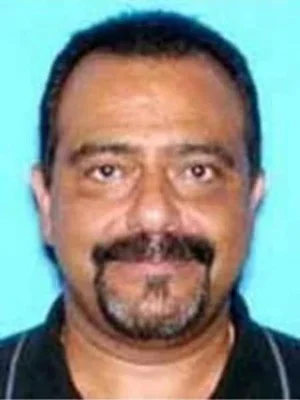
Farhad “Fred” Monem is wanted in connection with a federal public corruption case stemming from his former employment as the food services administrator for the Oregon Department of Corrections. On October 19, 2007, a federal grand jury in Eugene, Oregon, indicted Monem on 20 counts relating to a bribery scheme. The charges include conspiracy, mail fraud, wire fraud, bribery, money laundering, and interstate travel in aid of racketeering. The FBI is offering a reward of up to $20,000 for information leading to his arrest and conviction.
Monem's position within the Oregon correctional system placed him in a role connected to food services and government operations. The federal investigation focused on conduct authorities say occurred in connection with that employment. What began as a corruption investigation ultimately resulted in a wide-ranging federal indictment covering alleged bribery, fraudulent communications, financial transactions, and interstate activity.
Former Oregon Department of Corrections Administrator
Monem previously served as the food services administrator for the Oregon Department of Corrections. A position overseeing food services within a correctional system can involve substantial purchasing responsibilities, relationships with suppliers, and decisions affecting the acquisition of products used throughout government institutions. Those responsibilities require government employees to make decisions in the public interest and follow applicable procurement and ethics requirements.
The federal case against Monem centers on the accusation that his government position became connected to a bribery scheme. Public corruption cases involving procurement can arise when authorities believe an employee received improper benefits in connection with official decisions. Investigators eventually developed a case that extended well beyond a single bribery allegation.
Federal Bribery Investigation
Bribery involving a public employee can compromise the integrity of government purchasing and contracting. Vendors competing for government business are expected to compete through legitimate pricing, quality, and contractual terms rather than improper payments or personal benefits provided to government employees. When corruption enters that process, taxpayers and competing businesses can both be affected.
Federal authorities investigated Monem's conduct while examining his former employment with the Oregon Department of Corrections. The investigation eventually produced evidence that prosecutors presented to a federal grand jury. On October 19, 2007, the grand jury returned an indictment containing 20 separate counts.
Twenty Federal Counts
The federal indictment charges Monem with conspiracy, mail fraud, wire fraud, bribery, money laundering, and interstate travel in aid of racketeering. The variety of charges demonstrates the breadth of the government's case and indicates that investigators examined financial transactions and communications in addition to the underlying bribery allegations. Each charge addresses a different component of the conduct prosecutors contend occurred as part of the scheme.
Mail and wire fraud charges are frequently used in federal cases involving fraudulent schemes carried out through communications or transactions crossing jurisdictional boundaries. Money laundering charges can address the movement or handling of proceeds connected to specified criminal conduct. The interstate travel charge adds another element to the case by addressing alleged activity extending beyond a purely local Oregon matter.
Mail and Wire Fraud Charges
Mail fraud and wire fraud are among the federal charges Monem faces. These laws can apply when qualifying mail services or electronic communications are used as part of a scheme to obtain money or property through fraud. Business and government operations can generate extensive records of communications, invoices, payments, contracts, and correspondence that investigators can examine when reconstructing suspected misconduct.
In a corruption investigation, those records can help establish relationships between government employees and outside businesses or individuals. Investigators can compare communications with financial transactions and official decisions to determine whether they form part of a broader pattern. The federal grand jury ultimately determined there was sufficient evidence to indict Monem on multiple charges, though the charges remain unresolved while he remains a fugitive.
Money Laundering Allegations
Monem also faces federal money laundering charges. Money laundering investigations typically focus on financial transactions involving proceeds connected to criminal activity and can require investigators to trace money through bank accounts, businesses, checks, transfers, purchases, or other transactions. Following the financial trail can help authorities determine where money originated and who ultimately controlled or benefited from it.
Financial records are particularly important in public corruption investigations because payments can provide evidence connecting alleged benefits with official actions. Investigators can compare transaction dates with communications, contracts, purchasing decisions, and other government records. Monem's indictment reflects the government's conclusion that financial conduct formed an important part of the broader case.
Interstate Travel in Aid of Racketeering
Another charge against Monem involves interstate travel in aid of racketeering. Federal law can apply when interstate or foreign travel or facilities are used with the required connection to specified unlawful activity. The inclusion of this charge indicates that investigators examined conduct extending beyond activities occurring solely within an Oregon government office.
Interstate elements can substantially expand a federal investigation. Travel records, telephone communications, financial transactions, and business relationships across state lines can all become relevant depending on the circumstances of a case. Prosecutors included the racketeering-related travel offense among the 20 counts returned against Monem.
Federal Indictment in Eugene
The federal grand jury returned its indictment in Eugene, Oregon, on October 19, 2007. The case placed Monem under federal prosecution for conduct associated with his former government employment. Rather than involving a single criminal accusation, prosecutors brought a collection of charges covering corruption, fraud, financial activity, and interstate conduct.
Because Monem remains wanted, the case has not proceeded through a completed trial resolving the charges against him. The indictment represents formal federal criminal accusations, and those accusations would ultimately need to be addressed through the judicial process if he is arrested.
Who Is Farhad Monem?
Farhad Monem, also known as “Fred” Monem, was born on July 30, 1958, in Tehran, Iran. He is a naturalized American citizen and speaks both Farsi and English. His language abilities and international background are significant identifying details given his connections inside and outside the United States.
Monem is described as approximately 5 feet 10 inches tall and weighing around 210 pounds, with black hair and brown eyes. His previous occupations include work involving prison food purchasing and food sales. Because nearly two decades have passed since the federal indictment, his present physical appearance may differ considerably from photographs taken around the time of the original investigation.
Known Travel to Buffalo
Federal authorities have confirmed that Monem traveled to Buffalo, New York, on July 1, 2007. That trip occurred several months before the federal grand jury returned its indictment in Oregon. Buffalo's proximity to the Canadian border is notable given Monem's reported ties to Canada, although authorities have not publicly established that the trip itself involved crossing the border.
Historical travel information can remain important in a long-running fugitive investigation because it can help investigators identify previous routes, associates, accommodations, financial transactions, or other connections. Even information that is years old can become useful when compared with newer intelligence concerning a person's movements.
Connections to California, Canada and Iran
Monem has ties to California, Canada, and Iran. These connections considerably broaden the geographic scope of the search and mean investigators must consider locations well beyond Oregon. His ability to speak Farsi and English could also allow him to establish himself in different communities without the language barriers that might otherwise complicate relocation.
International connections can make fugitive investigations significantly more difficult. Authorities may need to consider immigration records, citizenship, travel documents, financial transactions, international law-enforcement cooperation, and the legal system of any country where a wanted person is located. Travel through another jurisdiction can also create opportunities for authorities to identify and potentially detain a fugitive.
Personal Habits Included in Wanted Information
Federal authorities have released additional information concerning Monem's habits to assist with identification. The FBI states that Monem is alleged to have been a heavy user of marijuana, hashish, and alcohol. Authorities also state that he likes to gamble.
Personal habits and interests can become relevant when a fugitive has been missing for many years because traditional identifying information may become outdated. Addresses, employers, vehicles, and physical appearances can change, while certain interests or behavioral patterns may continue. Someone who does not recognize Monem from his former government employment may instead have encountered him through social or gambling environments.
Why Public Corruption Cases Matter
Public employees are entrusted with government resources and decision-making authority. When bribery influences those decisions, government spending can be redirected away from legitimate competitive processes. The consequences can include financial losses, unfair advantages for particular vendors, and reduced public confidence in government institutions.
Procurement-related corruption can be particularly serious because government agencies routinely spend substantial amounts on products and services. Even decisions involving ordinary necessities such as food can represent significant expenditures when multiplied across an entire correctional system. Employees responsible for those purchases therefore occupy positions requiring substantial trust.
Nearly Two Decades as a Federal Fugitive
Monem's indictment dates to October 2007, making the case a long-running federal fugitive investigation. Nearly two decades have passed since the grand jury returned the 20-count indictment. During that period, Monem's residence, appearance, employment, associates, and travel patterns could have changed substantially.
Older photographs can become increasingly difficult to use as the sole means of identifying a fugitive. Investigators therefore publish additional details including languages, citizenship, previous occupations, geographic connections, and personal habits. A person who encounters Monem today may know nothing about his previous employment with the Oregon Department of Corrections.
$20,000 Reward for Information
The FBI is offering a reward of up to $20,000 for information leading to the arrest and conviction of Farhad Monem. The reward reflects the continuing effort to locate him and bring the unresolved federal prosecution before the appropriate court. Information concerning his current residence, travel, employment, associates, or other identifying details could potentially assist investigators.
Anyone who believes they have located Monem should provide the information directly to appropriate law-enforcement authorities. Members of the public should not attempt to confront, follow, detain, or apprehend a wanted individual themselves. Information can instead be passed to federal authorities for investigation and verification.
Farhad Monem Remains Wanted
Farhad “Fred” Monem remains wanted in connection with the 20-count federal public corruption case arising from his former employment as food services administrator for the Oregon Department of Corrections. The October 19, 2007, indictment charges him with conspiracy, mail fraud, wire fraud, bribery, money laundering, and interstate travel in aid of racketeering. He is a naturalized American citizen who speaks Farsi and English and has known connections to California, Canada, and Iran.
Authorities also know that Monem traveled to Buffalo, New York, on July 1, 2007, and continue to seek information that could establish his current whereabouts. The FBI is offering up to $20,000 for information leading to his arrest and conviction. Anyone with relevant information should contact appropriate law enforcement rather than attempting to approach or apprehend him.